
BEHIND THE LENS
People sometimes ask how I've been able to move comfortably between large-market enterprises, mid-market organizations, private-equity-backed companies, and founder-led businesses that appear to have very little in common.
The answer is not that I know every industry.
It is that, over time, I stopped focusing on industries altogether.
I began my career in consulting after studying economics at UC Santa Barbara. Consulting exposed me to different businesses, technologies and leadership teams, but the most formative chapter of my career came when I moved inside one organization and stayed there for fifteen years, eventually serving as Chief Financial Officer.
Those years changed the way I understood responsibility.
Decisions were no longer recommendations handed to someone else. They carried budgets, deadlines, operational consequences and accountability. Success was no longer measured by the quality of an idea. It was measured by whether the organization became stronger because of it.
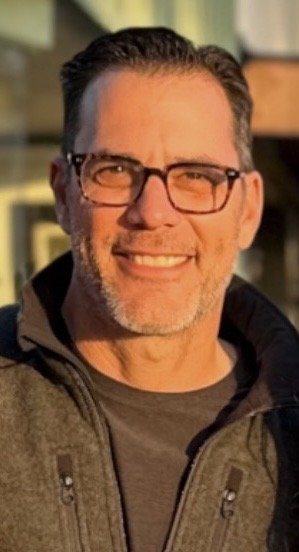
Todd Richards
Founder, Ideactiv Group
BA Economics UC Santa Barbara
MBA UCLA Anderson
20+ Years Enterprise Consulting
CFO
Executive Advisor
While I was still working inside the business, I returned to UCLA Anderson to earn my MBA. Several courses in organizational behavior gave language to patterns I had been noticing for years. It did not change the way I saw organizations. It helped me articulate what experience had already been teaching me. Looking back, that was the point where I began consciously distilling an approach that would eventually become the Ideactiv Lens™.
From then on, I found myself paying less attention to industries and more attention to organizations themselves.
Businesses may be organized into departments, systems and reporting lines, but the work rarely stays inside them.
The most consequential problems tend to form in the spaces between.
I was learning organizations.
When I returned to consulting, I realized I was still doing what had always interested me: entering an organization, learning how it actually worked and helping people make sense of what they were facing. Over time I became less interested in the visible problem and more interested in the conditions producing it.
Early in my career, someone told me I needed to speak up more if I wanted to lead. For a while I believed them. Eventually I noticed something different.
The more carefully I listened, the better I understood—and the less I felt the need to fill the silence.
“I still enjoy understanding new technologies and becoming fluent in the applications behind the work. I simply no longer mistake the technology for the work itself.”
What I once thought was something to overcome became one of the most useful parts of how I work. It changed not only how I approached clients, but how I approached organizations themselves.
That perspective has allowed me to move comfortably between industries and technologies without pretending to know everything on day one. Applications change. Business models evolve. Yet the underlying questions remain remarkably familiar. Information has to move. Decisions have to be made. Responsibilities have to be clear. People and systems have to work together well enough for an organization to move forward.
I still enjoy understanding new technologies and becoming fluent in the applications behind the work. I simply no longer mistake the technology for the work itself.
The work is creating understanding.
I am proud of the changes I have helped organizations make, but the clearest validation has always been what happened afterward. Clients invited me back. They introduced me to colleagues. They called years later when a different challenge emerged.
Repeat and referral work are difficult to manufacture. They happen when people trust both the work and the person doing it.
Looking back, I don't think my career taught me a methodology.
It taught me how organizations reveal themselves—if someone is willing to look closely enough.
I've simply spent the years since trying to help others see what I've been fortunate enough to learn.